— Buyer's Guide
RERA and the Homebuyer: Is the Law Really on the Developer's Side?
People say RERA favours developers and does little for buyers when possession is late. Recent MahaRERA, MahaREAT and High Court orders show what buyers actually get.
By Sigma Homes · Published 13 November 2026 · Updated 13 November 2026 · 7 min read

In Mumbai's housing societies and WhatsApp groups, one complaint comes up again and again: RERA protects the developer, not the buyer. The possession date slips, the buyer keeps paying EMIs, and the law, people say, offers nothing in return.
The frustration is real. The conclusion is not. The Real Estate (Regulation and Development) Act, 2016 gives a buyer specific, enforceable rights, and regulators and tribunals have used them to order refunds with interest, interest for every month of delay, and the return of money a builder tried to keep. This article sets out what those rights are, what recent orders show, and where the system still falls short.
What the law gives a buyer
RERA gives a buyer six concrete protections, and the remedy for delay in Section 18 is the strongest of them. The provisions below are taken from the text of the Act.
| Protection | Section | What it does |
|---|---|---|
| Money kept apart | 4(2)(l)(D) | 70% of what buyers pay goes into a separate bank account, used only for that project's land and construction. Withdrawals must match the work done, certified by an engineer, an architect and a chartered accountant. |
| Limit on advances | 13(1) | A builder cannot take more than 10% of the price until a registered agreement for sale is signed. |
| True advertising | 12 | If a buyer loses money by relying on a false statement in an advertisement or brochure, the builder must compensate. A buyer who withdraws gets the full amount back with interest and compensation. |
| Delay | 18(1) | If possession is late, the buyer can leave and get a refund with interest and compensation, or stay and get interest for every month of delay. |
| Defects | 14(3) | A defect reported within five years of possession must be fixed free of charge within 30 days. If it is not, the buyer is entitled to compensation. |
| Teeth | 40(1), 43(5) | Unpaid dues can be recovered as arrears of land revenue. A builder who appeals must first deposit the amount payable to the buyer (or a share of any penalty), so an appeal cannot simply stall payment. |
The delay remedy is where most of the argument sits, so it is worth being exact. The Supreme Court held in Newtech Promoters and Developers v. State of U.P. on 11 November 2021 that a buyer's right to a refund under Section 18(1)(a) is "an unconditional absolute right" when the builder fails to hand over on the agreed date. In recent Maharashtra orders the interest is the State Bank of India's highest marginal cost of lending rate plus 2% a year.
What recent orders show
In 2026 alone, MahaRERA, the Maharashtra Real Estate Appellate Tribunal (MahaREAT) and the Bombay High Court have ordered refunds, interest and early release of money in buyers' favour. Six recent decisions, as reported:
Omkar 1973, Worli: full refund plus interest. MahaRERA ordered a refund in December 2022 but let the builder deduct 2% of the price and pay no interest. On 8 April 2026 MahaREAT set both aside and ordered the full ₹7.69 crore back, with interest at SBI's highest MCLR plus 2% from each payment date. It held that the buyer's right to a refund with interest is "unqualified" where the delay is the builder's. (Squarefeat India)
One Park Avenue, Thane: a complaint once dismissed as premature. MahaRERA dismissed the buyer's complaint in 2021. On 9 October 2026 MahaREAT ordered Purva Oak to refund ₹1,85,99,612 with interest, payable within 30 days. The buyer's agreement promised possession by 31 December 2021, and the tribunal held that the regulator's extension of the project's completion date did not change that contractual date. (Free Press Journal)
Omkar Meridia, Kurla: "sell first, refund later" struck down. MahaRERA had allowed the builder to hold back a refund until a new buyer paid in full, and to forfeit 10% of the price. On 1 July 2026 MahaREAT called the condition "arbitrary, unreasonable and unconscionable" and ordered ₹1.15 crore refunded across two flats, with interest from each payment date. (Squarefeat India)
Shristi Residency, Jogeshwari East: no excuse for a slow redevelopment. On 23 June 2026 MahaRERA partly allowed 28 of 33 buyers' complaints and ordered interest at SBI MCLR plus 2% on the money paid, for the period of delay. It rejected the developer's disputes with its own contractor and arbitration as grounds for delay. (Aryan Age)
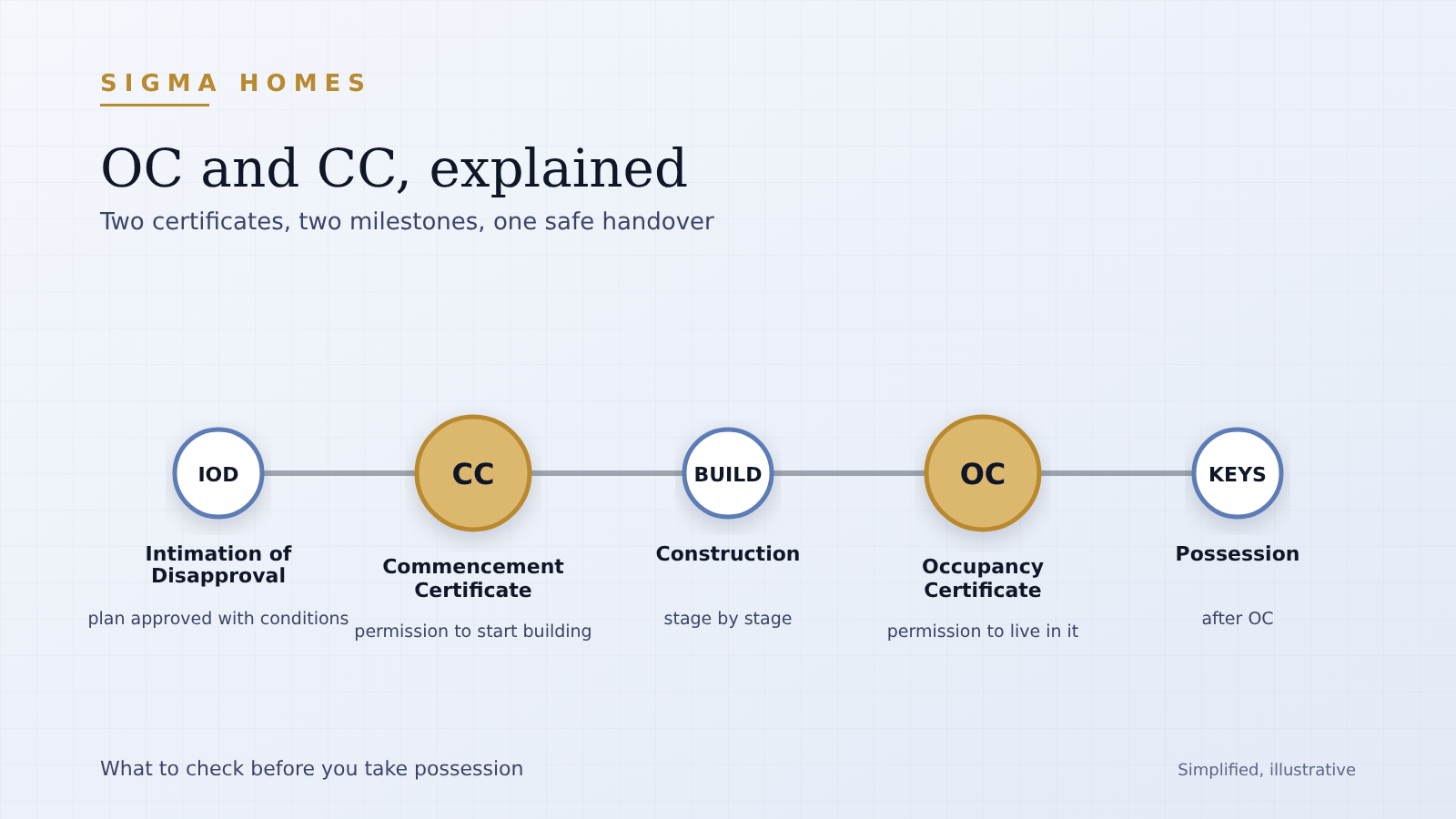
Vrundavan, Kalyan West: small buyer, same rule. A buyer of a ₹16.84 lakh flat received possession in December 2020, but the occupancy certificate came only in March 2021. On 6 May 2026 MahaRERA held that handing over a flat without a valid occupancy certificate is not lawful delivery, and ordered interest for the whole delay plus ₹20,000 in costs. (Squarefeat India)
North Sea Heights, Bombay High Court: money released while the appeal runs. MahaRERA ordered a refund in September 2025, and the builder appealed. On 30 March 2026 the High Court upheld the tribunal's order letting the buyer withdraw the deposited amount, noting that more than seven years had passed since the promised possession date. It said homebuyers "cannot be made to wait indefinitely" and that an appeal deposit is not a stay. (Free Press Journal)
The pattern is consistent. Where a builder missed the agreed date, the regulators applied the same formula, and they refused excuses based on internal disputes or one-sided contract clauses.
Where the system still falls short
The buyers who say RERA is slow have a point, and the same orders show where.
- Relief arrives late. The North Sea Heights agreements were signed in 2015, with possession promised for 2018. A refund was ordered in 2025 and was still being fought over in the High Court in 2026.
- Interest is the usual relief, not full compensation. In the Shristi Residency order, MahaRERA rejected separate claims for extra compensation, and buyers say they will challenge parts of the order, seeking interest from a year earlier and the one-year grace period in their agreements removed. In a separate August 2026 refund order for a commercial unit, a claim of ₹15 lakh for lost business and damages was rejected. (Pune Pulse)
- Registered extensions exist. The developer in the Shristi case pointed to an extension of its MahaRERA registration to 31 December 2026. The regulator still ordered interest, but buyers should expect the argument.
- The money must be chased to the right door. On 5 November 2026 the Bombay High Court quashed a MahaRERA refund order against a new developer in a Kandivali West redevelopment, because the new developer had neither received the buyers' ₹37 lakh nor taken over the old developer's liabilities. The buyers can still pursue the original developer. (Squarefeat India)
None of this makes RERA a developer's law. It makes it a law that works best for a buyer who has the paperwork in order and acts early.
What a buyer should do
The orders above point to a short list of habits that decide whether RERA works for a buyer.
1. Check the registration before you book. Ask for the project's RERA number and look it up on the MahaRERA website. Note the possession date in your own agreement, not only the one on the registration.
2. Insist on a registered agreement for sale. A builder cannot take more than 10% of the price before one is signed (Section 13(1)).
3. Read the possession and refund clauses. Note any grace period. One-sided terms, such as holding a refund until the builder finds another buyer, have been struck down, but it is easier not to sign them.
4. Keep every receipt. Interest in these orders runs from the date of each payment.
5. Choose your remedy. Under Section 18 you can leave with a refund and interest, or stay and take interest for each month of delay.
6. Know who holds your money. If a project changes hands, find out which company received your payments and whether the new developer formally took over the old one's liabilities.
7. Report defects in writing. Section 14(3) covers defects reported within five years of possession.
At Sigma Homes, our advice is simple: check a project's RERA registration and read the key clauses of the agreement before you pay a booking amount. Our service is zero brokerage for buyers.
This article is general information based on published orders and the text of the Act. It is not legal advice. Anyone with a dispute should consult a qualified lawyer.
Sources
All pages below were opened on 13 November 2026. Case details come from press reports of the orders; the order texts themselves are on the MahaRERA and MahaREAT websites.
- Act: Real Estate (Regulation and Development) Act, 2016, full text
- Supreme Court: Newtech Promoters and Developers v. State of U.P., 11 November 2021, summary (Casemine)
- Omkar 1973, Worli, MahaREAT, 8 April 2026: Squarefeat India
- One Park Avenue, Thane, MahaREAT, 9 October 2026: Free Press Journal
- Omkar Meridia, Kurla, MahaREAT, 1 July 2026: Squarefeat India
- Shristi Residency, Jogeshwari East, MahaRERA, 23 June 2026: Aryan Age
- Vrundavan, Kalyan West, MahaRERA, 6 May 2026: Squarefeat India
- North Sea Heights, Bombay High Court, 30 March 2026: Free Press Journal
- Commercial unit refund, MahaRERA, 13 August 2026: Pune Pulse
- Samaj Darshan, Kandivali West, Bombay High Court, 5 November 2026: Squarefeat India
SIGMA HOMES · Zero Brokerage · RERA Registered · Verified Properties